
Why Some Children’s Books Endure and Others Disappear
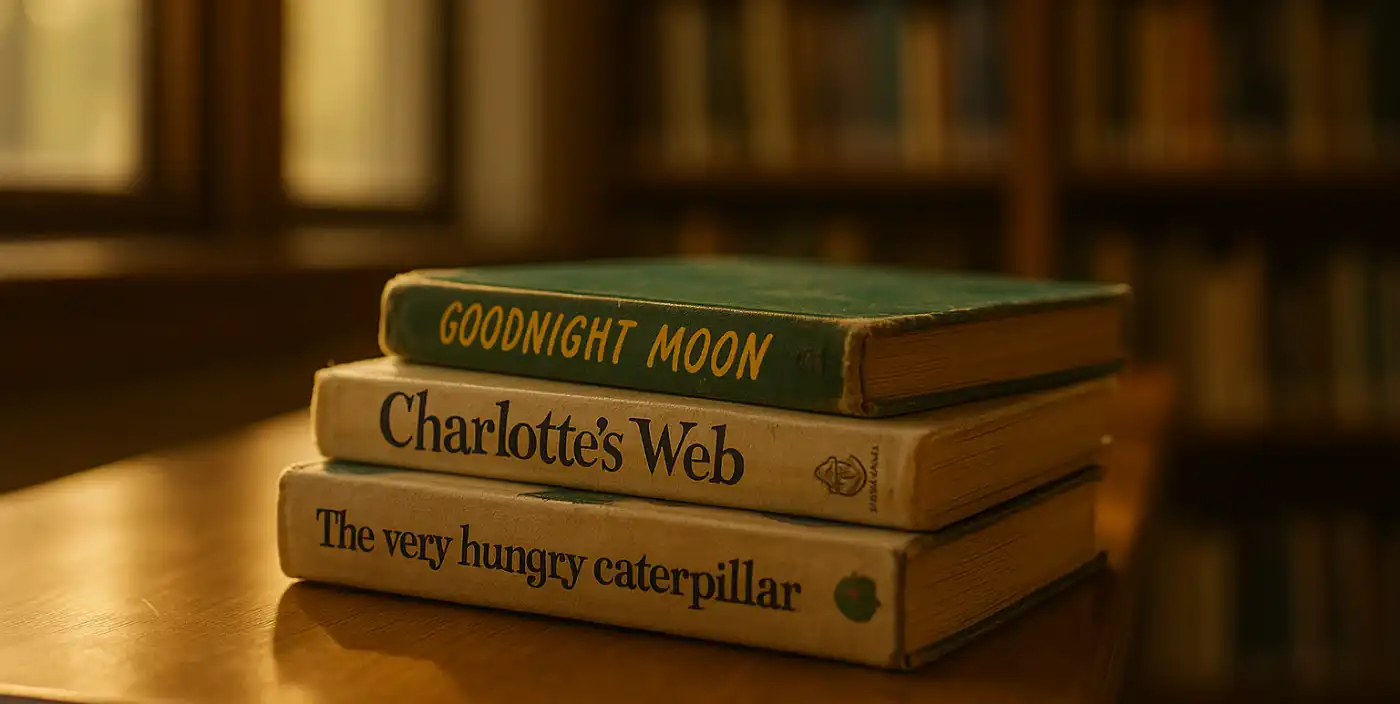
There’s something curiously powerful about the children’s books that endure. Titles like Goodnight Moon, The Very Hungry Caterpillar, or Charlotte’s Web are not only well known - but they’re embedded in our cultural fabric. They persist, reappearing on shelves, in classrooms, and on nightstands for decades. But the reality is, for every one of these enduring titles, there are countless others that vanish without a trace. They’re out of print, out of circulation, and largely out of memory. So, what determines the fate of a children’s book? Why do some become beloved across generations while others are quietly forgotten?
The Emotional Infrastructure of a Classic
Children may not analyze literature, but they respond to it viscerally. The books that endure often tap into something foundational – emotions and truths that resonate across time. Where the Wild Things Are isn’t just about monsters and mischief; it’s a remarkably subtle exploration of anger, isolation, and the desire to be loved. These books survive because they initiate emotional conversations, often long before a child has the vocabulary for them.
Timeless children’s literature doesn’t talk down to its audience. Instead, it trusts the intelligence and emotional capacity of its readers, allowing space for growth and reinterpretation as the child matures. That’s why the same book can mean something entirely different to a reader at 5, 15, or 45.
The Invisible Influence of Timing and Cultural Context
While literary merit matters, it’s not the sole ingredient for longevity. Timing plays a considerable role in determining which stories become canonical. The Snowy Day was groundbreaking not just for its soft, urban quietness, but for its representation – one of the first major picture books to feature a Black protagonist in a universal story. Similarly, Harry Potter landed at the perfect cultural moment, capturing imaginations at a time when the appetite for immersive fantasy was swelling.
Other excellent books – perhaps even more carefully crafted – have disappeared simply because they didn’t meet the moment. They may have been too niche, too experimental, or poorly marketed. In a sense, literary legacy is partially an accident of history.
The Role of Adults in Gatekeeping Childhood
Ironically, the longevity of a children’s book often hinges on adult approval. Parents, educators, and librarians decide what books to purchase, recommend, and read aloud. Their choices are shaped by nostalgia, perceived educational value, and personal taste.
Sometimes books are preserved not because they’re universally beloved by children, but because adults see in them something worth saving. The Little Prince continues to thrive not just as a whimsical tale for children, but as a philosophical parable embraced by grown-ups. In this way, the canon of children’s literature is curated – actively, if sometimes unconsciously – by the adults surrounding young readers.

Books That Vanish
For every enduring classic, there are dozens of once-popular titles that have disappeared from cultural view. In some cases, this is due to dated cultural assumptions or illustrations that no longer align with current values. In other cases, it’s simply because new stories emerged that better captured the contemporary imagination.
These books didn’t necessarily fail – they were just tethered to a specific moment in time. Some are being reconsidered through modern lenses, leading to complicated legacies. Others quietly fade, remembered fondly by a small group of readers but lacking the sustained relevance needed to remain in circulation.
The Architecture of Re-readability
A major hallmark of lasting children’s literature is re-readability. Children crave repetition, and a book that withstands multiple readings – by both child and adult – is more likely to endure. This often comes down to language, rhythm, and emotional resonance.
Such books succeed not just because they’re fun, but because they offer something performative. They invite interaction. Meanwhile, books like Winnie-the-Pooh or Matilda provide layers of humor and insight that reveal themselves more fully over time, making them engaging for both, children and the adults who return to them.
Visual Storytelling That Ages Well
In children’s literature, illustrations are not auxiliary – they’re foundational. A book’s visual style plays a crucial role in its identity and its ability to endure.
When illustrations transcend trends, they contribute to a book’s longevity. But the opposite is also true: books tied too closely to a particular aesthetic era often feel dated over time and quietly fall out of favor.
Multiplicity of Meaning
Some books endure because they offer different things at different stages of life. The Little Prince is a profound example. What appears to be a simple story for children is layered with philosophical insights that deepen with each reading.
This capacity for reinterpretation ensures that the book continues to speak to readers of all ages, allowing it to be revisited and reintroduced to each new generation with fresh relevance.
Evolving Definitions of a Classic
The traditional children’s canon has historically been dominated by Western voices, often excluding diverse perspectives. That’s changing- and with it, our understanding of what constitutes a “classic.” New books are joining the conversation, not because they check diversity boxes, but because they offer authentic, beautifully told stories that resonate deeply.
A more inclusive canon reflects the evolving identities and experiences of modern readers. The classics of tomorrow will be more representative, more expansive, and more meaningful to a broader audience.
In the End, It’s About Connection
Ultimately, a children’s book becomes a classic not because of sales figures or awards, but because it creates a lasting emotional imprint. Some books are remembered across generations; others are remembered by just one reader. Both forms of legacy matter.
Not every book will change the landscape of children’s literature, and that’s not the point. The goal isn’t permanence – it’s presence. To be meaningful in the moment. To offer a child comfort, curiosity, or courage. And sometimes, that fleeting connection is all it takes to keep a story alive in someone’s memory long after the book has disappeared from shelves.